
Leadership Coaching & Development Programs
Leadership development solutions for individuals, teams and organisations from executive and career coaching to in-company workshops, professional co-development and a program dedicated for high-potential women.
Need individual support through a leadership or career challenge?
Individual Coaching
Executive Coaching
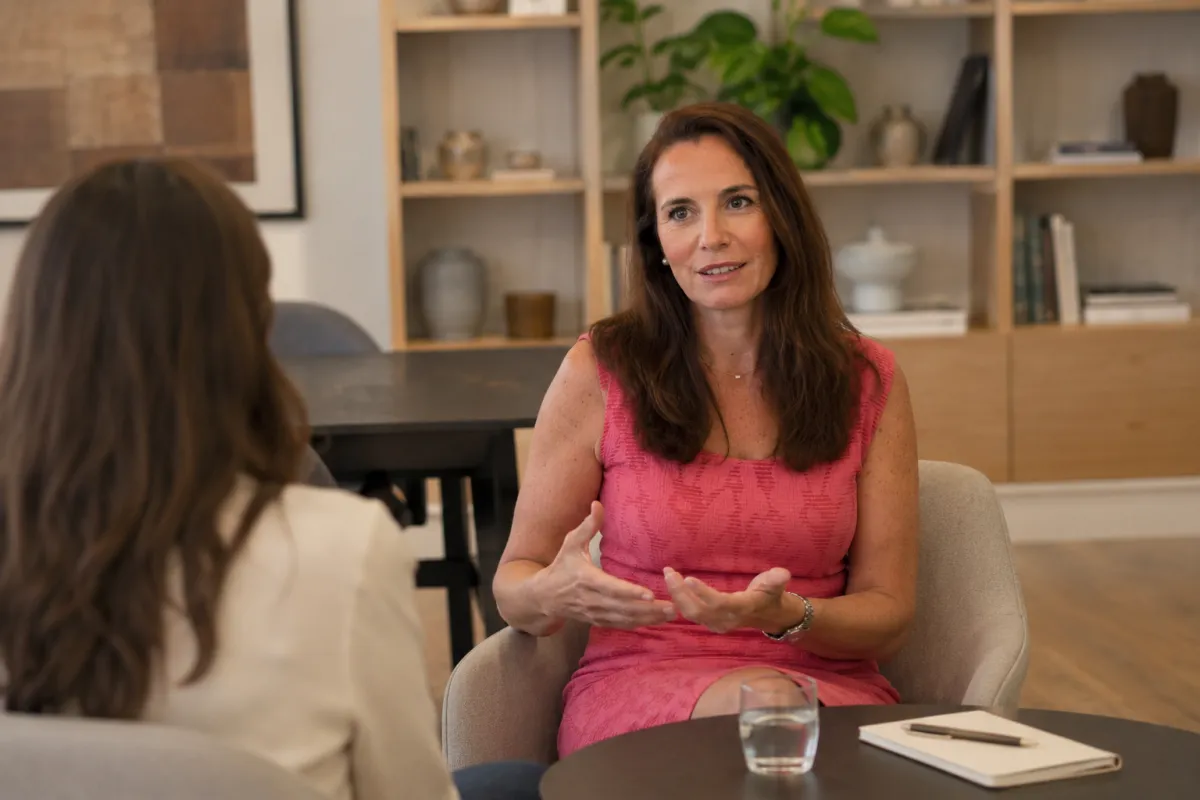
Executive leadership comes with complex decisions, high expectations and little room to step back. Having a confidential thinking partner outside the organisation creates the space to challenge assumptions, gain perspective and lead with greater clarity.
Executive coaching provides senior leaders with a confidential and structured space to strengthen their leadership impact, navigate complexity and make intentional decisions in demanding environments.
Common topics we address include:
Stepping into a new or more complex executive role
Strengthening executive presence and leadership impact
Leveraging strengths while addressing leadership blind spots
Building and engaging high-performing leadership teams
Navigating difficult decisions and strategic conversations
Prioritising effectively in high-pressure environments
Managing stress while sustaining long-term performance

Leadership Coaching
Great leadership is not about adopting someone else’s style. It is about understanding how you create impact, developing the behaviours your role requires and learning how to bring out the best in others.
Leadership coaching supports managers and senior leaders who want to strengthen their leadership effectiveness while developing a style that feels authentic to who they are.
The coaching combines reflection with practical application to help leaders navigate the real challenges they face at work.
Common topics we address include:
Transitioning successfully into a first management role
Developing an authentic leadership style
Increasing influence and leadership presence
Motivating, empowering and engaging teams
Managing performance and difficult conversations
Giving and receiving effective feedback
Prioritising, delegating and managing competing demands
Leading with greater confidence during change and uncertainty
Career Coaching
A career is rarely a straight line. New ambitions, leadership opportunities, organisational changes and personal life transitions can all create moments when it becomes necessary to reassess what comes next.
Career coaching creates the space to step back, clarify what matters and make intentional career decisions based on your strengths, ambitions, values and current life context.
Rather than simply choosing the next role, the objective is to build a career strategy that is both ambitious and sustainable.

Common areas of focus include:
Clarifying the next step in your career
Identifying strengths and defining your professional positioning
Preparing for a transition into a larger or more strategic role
Exploring career opportunities inside or outside your current organisation
Building a longer-term career vision and action plan
Increasing confidence and visibility
Returning to work after maternity leave, parental leave or another extended absence
Navigating major career and life transitions
Want managers to learn from one another and strengthen collective intelligence?
Activate Collective leadership in Teams
Harness collective intelligence to turn real workplace challenges into shared learning and concrete action
By harnessing collective intelligence, a group of professionals helps one another step back from real workplace challenges, explore different perspectives and identify new ways forward.
The objective goes far beyond solving the issue brought to the session. Participants learn to better understand their own patterns, broaden their perspective, challenge assumptions and develop a more effective leadership posture. They leave not only with ideas, but also with greater clarity, peer support and new ways of approaching complex situations.
Learning comes from the group
Unlike traditional training, where knowledge is primarily transmitted by an expert, professional co-development draws on the experience and expertise already present within the group.
Unlike individual coaching, the learning process is collective.
Each participant brings valuable knowledge from their own professional experience. Through structured listening, questioning and consultation, that individual experience becomes a source of learning for everyone.
Over time, this helps organisations create fewer silos, stronger listening, better circulation of ideas and a greater habit of asking for — and offering — support.
Participants also develop their ability to think differently, take initiative and explore solutions they might not have considered alone.
From reflection to action
Co-development is not simply a space for discussion.
Each session works on a real and current professional situation brought by one participant. The group explores the challenge through a structured process designed to generate insight, perspective and possible courses of action.
At the end of each session, the participant defines concrete actions to implement before the next meeting.
When is professional co-development particularly valuable?
It is especially relevant for:
Managers facing similar leadership challenges
First-time or newly promoted managers
Project leaders working across functions
HR and People leaders
Senior leaders and executives
Cross-functional teams
Agile or project-based teams that need to strengthen collaboration
Communities of leaders who can benefit from learning from one another
What it develops
Over time, professional co-development strengthens both individual capability and collective ways of working.
It helps participants:
Step back before acting
Analyse complex situations from multiple perspectives
Strengthen active listening and questioning skills
Develop greater self-awareness
Learn to ask for and offer support
Build confidence in navigating ambiguity
Experiment with new leadership behaviours
Turn experience into practical learning
For organisations, this can contribute to:
Stronger collaboration across teams
Less managerial isolation
Better circulation of knowledge and good practices
Increased trust and peer support
More initiative and shared responsibility
Stronger problem-solving capabilities
A more collaborative leadership culture
Professional co-development is based on the methodology developed by Adrien Payette and Claude Champagne in Québec, which uses a structured consultation process to help professionals learn from one another through real situations from their practice.
Each program is adapted to the organisation’s context, the profile of the participants and the leadership challenges they face.

Looking to develop specific leadership capabilities across a team or talent population?
In-Company Workshops

How to Remain a Clear-Headed Leader Under Pressure
Helping leaders move from automatic reactions to intentional leadership.
Pressure changes behaviour.
In demanding situations, even experienced leaders can become overly directive, impatient, avoid difficult conversations, stop listening or make decisions too quickly. These reactions can affect decision quality, team dynamics and leadership credibility at precisely the moments when clarity matters most.
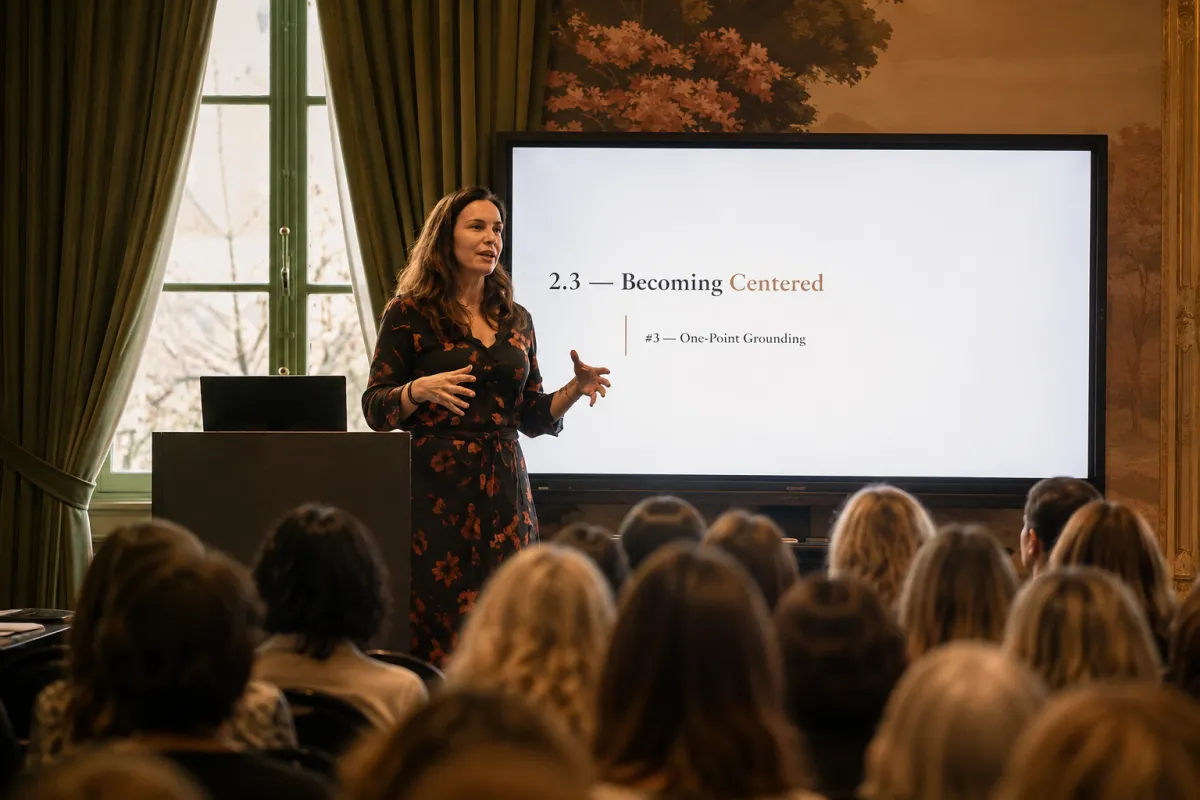
This interactive in-company workshop helps leaders understand what happens to their thinking and behaviour under pressure and recognise their own patterns before those reactions take over.
Participants develop practical mental-regulation techniques that help them regain clarity, stabilise their response and make more intentional leadership decisions in high-stakes situations.
Key learning outcomes
Participants will learn to:
Understand how pressure affects the brain, behaviour and leadership presence
Recognise common automatic reactions to stress
Identify their own personal “stress signature”
Apply practical regulation techniques to regain clarity
Move from automatic reactions to more intentional leadership responses
Build simple practices that support sustainable behaviour change
Format
An interactive in-company workshop combining practical frameworks, guided individual reflection, exercises and small-group discussions.

Prioritising with Impact: Developing the Ability to Say No and Focus on What Truly Matters
Helping employees protect strategic priorities without damaging relationships.
In organisations where priorities multiply faster than resources, the ability to say no — or not now — becomes an essential leadership capability.
Yet high-performing professionals often continue accepting requests even when doing so compromises more important priorities. Fear of disappointing others, damaging relationships or appearing unhelpful can make boundary-setting particularly difficult.
This interactive in-company workshop helps participants understand what drives automatic “yes” responses and develop practical ways to set boundaries with confidence, clarity and respect.
The goal is not to encourage people to refuse more requests. It is to help them make more deliberate choices about where their time, attention and energy create the greatest value.
Key learning outcomes
Participants will learn to:
Recognise the situations that trigger an automatic “yes”
Identify the beliefs and fears that make boundary-setting difficult
Reframe saying no as a leadership and prioritisation skill
Distinguish between urgency and strategic importance
Use practical language to decline, renegotiate or reprioritise requests
Practise setting boundaries while preserving constructive relationships
Format
An interactive in-company workshop combining individual reflection, practical tools, real workplace scenarios and peer discussion.

Working with Someone You Don’t Like
Turning workplace friction into more effective collaboration.
Difficult working relationships consume time, attention and emotional energy — and can quickly affect communication, collaboration and team performance.
The challenge is rarely solved by simply asking people to “communicate better”. Our interpretation of another person’s behaviour can be influenced by value conflicts, projection, previous experiences and confirmation bias, reinforcing tensions over time.
This interactive in-company workshop gives participants a practical framework for understanding why certain professional relationships trigger strong reactions and how to change the dynamic.
The objective is not to make colleagues like one another. It is to help them work together with greater perspective, professionalism and effectiveness.
Key learning outcomes
Participants will learn to:
Understand why certain workplace relationships trigger strong emotional reactions
Recognise psychological mechanisms that can reinforce interpersonal tension
Separate observable behaviour from interpretation
Challenge assumptions and confirmation bias
Explore different perspectives on a difficult relationship
Adapt their communication and leadership posture
Develop a practical approach to improving collaboration
Format
A highly interactive in-company workshop combining psychological insights, guided reflection, practical exercises and small-group discussion.

Beyond Performance: Activating Your Visibility to Take Ownership of Your Career.
Helping high-performing talent turn contribution into recognised impact.
High performance does not automatically translate into career progression.
In complex organisations, talented employees can deliver consistently strong results while remaining less visible than colleagues who communicate their contribution more effectively or build stronger networks with key stakeholders.
This is particularly relevant for high-potential talent who believe their work should “speak for itself”.
This interactive in-company workshop reframes visibility as a professional and leadership capability rather than self-promotion.
Participants learn how to communicate their contribution, build strategic visibility and take greater ownership of their career while remaining authentic to their personality and values.
Key learning outcomes
Participants will learn to:
Understand why performance alone does not always lead to career progression
Recognise beliefs that make professional visibility uncomfortable
Understand the different dimensions of strategic visibility
Communicate achievements and impact with authenticity
Strengthen relationships with relevant stakeholders
Increase visibility without adopting an artificial “self-promotional” style
Build a practical visibility action plan
Particularly relevant for
High-potential talent, emerging leaders, women’s leadership initiatives and internal career-development programs.
Create a Learning Experience That Fits Your Organisation
Looking for a practical and engaging learning experience for your managers, leaders or high-potential talent?
Each workshop can be delivered in-company and adapted to your organisation’s context, audience and leadership priorities.
Let’s identify the topic, audience and format that will create the most value for your teams.
Want to accelerate the readiness of high-potential women for senior leadership roles?
LeadHer Academy
Accelerate a ready-now pipeline of women leaders in 90 days.
Your organisation may already have talented women in the leadership pipeline. The challenge is ensuring they feel ready, visible and equipped to step into the roles you need them to fill.
LeadHer Academy is a leadership development program designed for high-potential women from Manager to Senior Leader level.
It helps organisations strengthen their female leadership pipeline by addressing factors that traditional leadership training often overlooks: the internal barriers that can cause capable women to self-select out of opportunities, the realities of career progression across different life stages, and the opportunity to leverage women’s differentiated leadership strengths.
Through a combination of cohort learning, individual coaching, practical application and sponsor involvement, participants build greater confidence, visibility and readiness for their next leadership role. The broader organisational objective is to strengthen succession planning, retention and leadership diversity.
The program develops three areas
Break the Inner Glass Ceiling — identify and address internal patterns that can limit confidence, assertiveness and progression.
Navigate Career Across the Female Life Cycle — make intentional career decisions while navigating different personal and professional life stages.
Own Women’s Differentiated Strengths — leverage authentic strengths to increase influence, visibility and leadership impact
Designed for organisations that want to
Accelerate the readiness of high-potential women
Strengthen their succession pipeline
Increase retention of female leadership talent
Build greater confidence and visibility among future leaders
Create more sustainable leadership progression
Increase leadership diversity
Strengthen Your Pipeline of Women Leaders
Want to accelerate the readiness of your high-potential women while strengthening succession planning and retention?
Let’s discuss your current leadership pipeline, your priorities and how LeadHer Academy could support your organisation.
COPYRIGHT © 2026 Cécile Meunier LEADERSHIP COACHING. part of Productions Associées ASBL.
- ALL RIGHTS RESERVED.