Mastering Leadership Under Pressure and Stress
Leadership, Empathy, Pressure
When Pressure Pushes Your Best Leadership Self Out of Reach
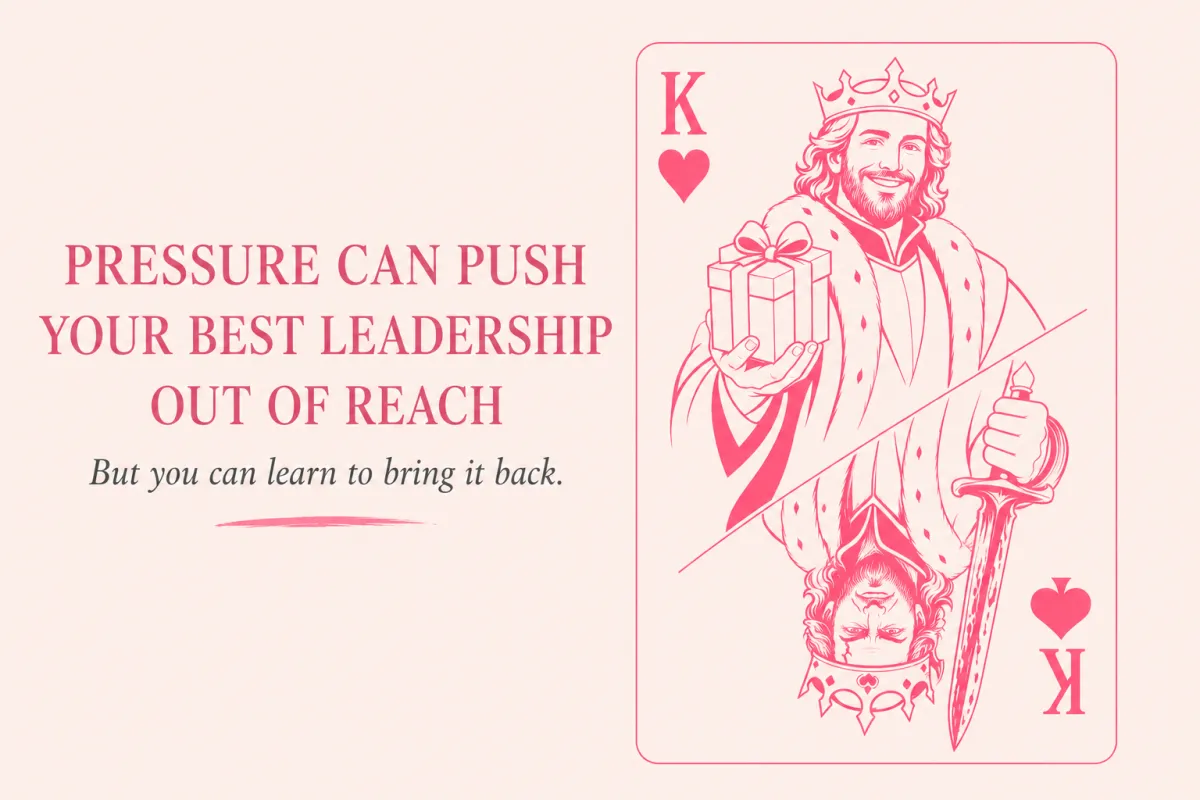
Pressure does not always reveal the leader you are. Sometimes it temporarily removes the leader you want to be. The work of leadership is learning how to stay human, grounded and clear-minded when everything around you is moving fast.
Pressure Doesn’t Always Bring Out Your Best – And That’s Human
Many leaders quietly carry the belief that “real leaders shine under pressure.” Yet in coaching conversations at Cécile Meunier Leadership Coaching, a different truth often emerges: under intense pressure, even experienced leaders find themselves becoming sharper, colder, or more transactional than they would ever choose to be.
This is not a sign that you are a poor leader. It is a sign that your nervous system is doing its job. Under threat — missed targets, urgent board demands, a failing project, or a turbulent transformation — your brain prioritises speed and safety over nuance and connection. The leader you aspire to be can feel temporarily out of reach.
📌 Key Takeaway: Pressure does not define your leadership identity; it reveals your current capacity. Capacity can be developed.
Sympathy vs Empathy: Why the Difference Matters in Turbulent Times
When things get tough, teams do not just need quick decisions; they need to feel seen. This is where the distinction between sympathy and empathy becomes crucial for leaders.
Sympathy says, “I feel sorry for you.” It keeps a slight distance, observing the other person’s experience from the outside. It can sound kind, but it often leaves people feeling alone with their reality.
Empathy says, “I’m willing to understand what this is like for you.” It does not require you to agree or to fix everything. It requires you to be present, curious and respectful of another person’s inner world.
In moments of organisational change — restructuring, AI-enabled workflows, shifting roles — sympathy can unintentionally minimise people’s experience: “I know it’s hard, but we all just need to get on with it.” Empathy sounds different: “I can see this change is unsettling. Tell me what feels most uncertain for you right now.”

Empathy turns difficult conversations into moments of trust and emotional safety.
How Leaders Can Maintain Empathy Under Pressure
Maintaining empathy when you are under pressure is not about being endlessly patient or agreeable. It is about staying connected to yourself and others while you take decisive action. A few practical anchors can help:
Pause your reactivity, even briefly. Before responding to a tense email, a challenging stakeholder, or a worried team, take one conscious breath. Ask yourself, “What matters most in how I show up in this moment?” That micro-pause is often enough to shift from defensive to intentional.
Name both task and emotion. Under stress, leaders tend to talk only about tasks, metrics and deadlines. Adding a simple emotional acknowledgement — “I know this feels heavy” — reassures people that their experience is not invisible.
Ask one more question than feels comfortable. When time is tight, curiosity is often the first casualty. Try asking, “What is the hardest part of this for you?” or “What support would make a real difference right now?” Then listen without rushing to fix.
Hold boundaries with kindness. Empathy does not mean saying yes to everything. It means being clear and human at the same time: “We do need to move ahead with this decision, and I still want to understand how it lands for you.”
💡 Pro Tip: Under pressure, shorten your conversations if you must — but do not remove the human moment at the beginning.
Self-Awareness: Noticing Who You Become Under Stress
The leaders who sustain empathy in turbulent times share a common discipline: they study their own patterns under pressure. They know the cues that signal they are shifting away from the leader they want to be — the clipped tone, the impatience, the urge to control everything personally, or the temptation to withdraw.
At Cécile Meunier Leadership Coaching, we often invite leaders to map their “pressure profile”:
What do I tend to think when I am under strain? (“No-one else is moving fast enough.” “If this fails, it’s on me.”)
How do I usually behave? (Over-controlling, avoiding, over-working, becoming overly critical.)
How does this impact how safe or supported my team feels?
Self-awareness does not remove pressure, but it gives you choice. Instead of being swept along by your default reactions, you can say, “I recognise this pattern. What would the leader I want to be do here?”
Mindset: From Surviving the Storm to Leading Through It
Turbulent times — market shocks, restructurings, AI-enabled transformation — invite a particular mindset shift in leadership. Moving from “I must hold everything together alone” to “We can navigate this together” changes how you show up, how you listen, and how you use empathy as a performance asset rather than a luxury.
A scarcity mindset under pressure says, “There is no time for feelings.” It often results in disengagement, quiet resistance and hidden risks.
A leadership mindset says, “How I relate to people now will shape their willingness to move with me.” It recognises empathy as central to performance, not opposed to it.
Leaders who consciously adopt this mindset tend to create teams that stay engaged even when the outlook is uncertain. People may still disagree with decisions, but they feel respected in the process — and that is often what keeps them committed.
Bringing Your Best Leader Back Into the Room
Pressure will continue to visit your leadership. There will be days when the leader you want to be feels far away. What matters is not perfection, but your capacity to notice, reset and return — to empathy, to clarity, to the kind of presence that helps people move through change rather than feel crushed by it.
Developing that capacity is a practice, not a personality trait. With thoughtful support, honest reflection and deliberate habits, leaders can learn to perform under pressure, lead through change and keep teams engaged — without losing themselves in the process.
This is the heart of the work at Cécile Meunier Leadership Coaching: helping leaders stay human and effective when it matters most, so that pressure no longer removes the leader you want to be, but refines the leader you already are becoming.


