Close the Leadership Knowing-Doing Gap
Leadership, Organisational Development
Bridging the Gap Between Leadership Knowledge and Behaviour
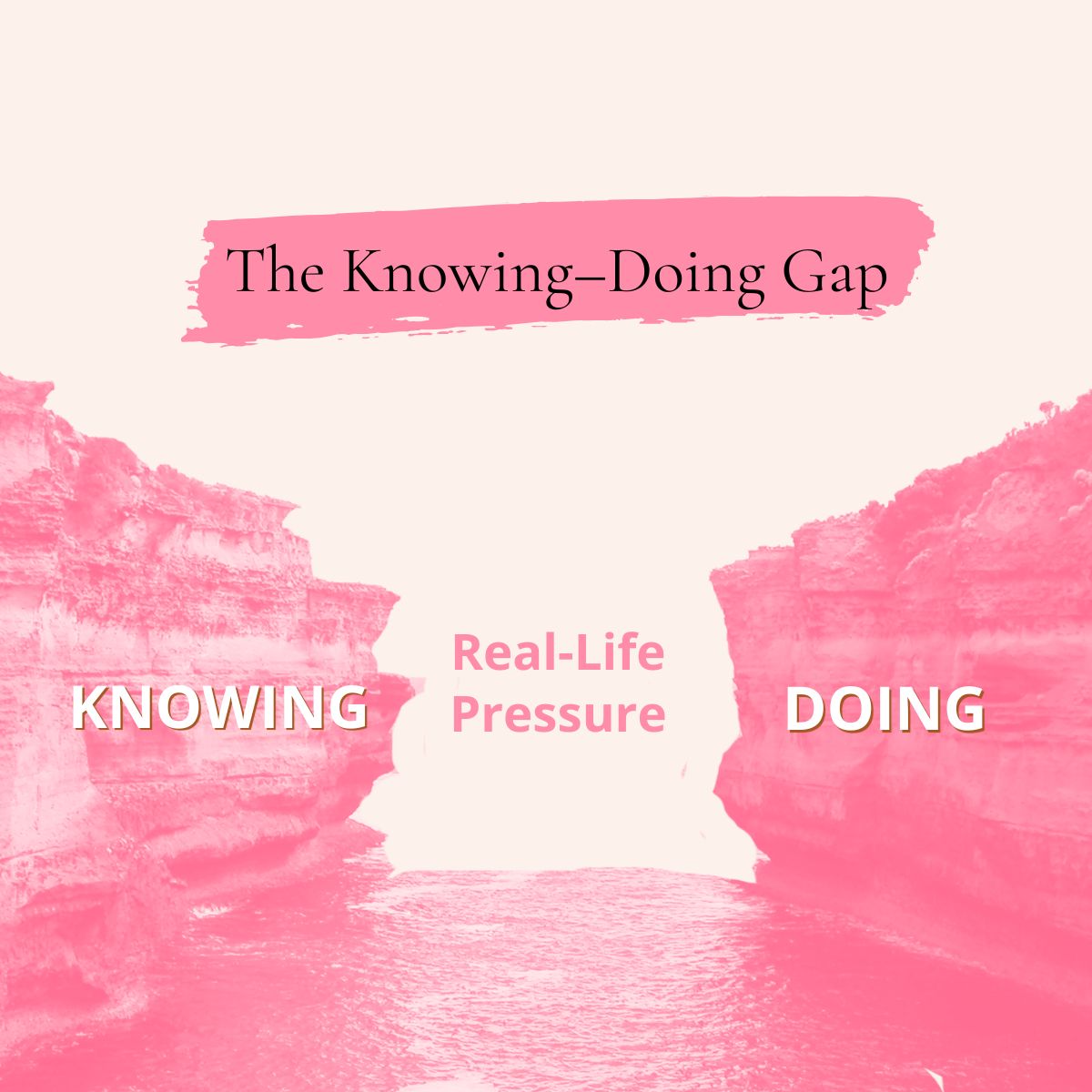
Many organisations invest heavily in leadership programmes, yet see little change in how leaders actually behave when the pressure is on. Understanding why this knowing–doing gap persists is the first step to closing it.
The Persistent Gap Between Knowing and Doing
Most leaders can describe the hallmarks of effective leadership: active listening, coaching conversations, clear expectations, constructive feedback, and psychological safety. They have attended workshops, read books, and completed e‑learning modules. In terms of knowledge, they are often well equipped.
Yet, in real meetings, under time pressure or scrutiny from senior stakeholders, those same leaders may interrupt, revert to command‑and‑control, avoid difficult conversations, or default to familiar habits. The gap between leadership knowledge and behaviour is rarely about a lack of information; it is about the difficulty of acting differently when it matters most.
Why Traditional Leadership Programmes Fall Short
Many leadership programmes are expertly designed to transfer concepts. Participants leave with models, frameworks, and slide decks. However, these programmes often only address knowledge. They assume that if leaders understand a model, they will naturally apply it back at work.
In reality, behaviour change requires more than insight. Without structured opportunities to experiment, receive feedback, and reflect, new ideas remain theoretical. Leaders return to overflowing inboxes, urgent priorities, and entrenched norms. The path of least resistance is to do what they have always done, even if they now know a better way in theory.
Practice: Rehearsing for Real Moments of Leadership
To close the knowing–doing gap, leaders need practice, not just principles. Just as athletes and musicians rehearse before performing, leaders must rehearse critical conversations, decision‑making under uncertainty, and responses to challenge or conflict. Repeated practice builds the “muscle memory” required to access new behaviours when the stakes are high.
Effective programmes therefore include role plays, simulations, and real‑play scenarios based on participants’ current challenges. They encourage leaders to try out new approaches in a low‑risk environment, make mistakes, and adjust. Over time, this deliberate practice shifts behaviours from awkward and effortful to natural and reliable.
Peer Support: Learning in Community, Not in Isolation
Behaviour change is easier when leaders are not doing it alone. Peer support creates a safe space to share experiments, setbacks, and small wins. Regular peer learning groups or action learning sets help leaders normalise the discomfort of trying something new and reduce the temptation to slip back into comfortable habits.
When peers ask, “How did that conversation go?” or “What did you notice when you paused before responding?”, they reinforce that new behaviour is expected and valued. Over time, this collective focus on practice turns leadership development from a one‑off event into an ongoing, social process.
Accountability: Making Commitments Visible and Measurable
Knowledge rarely changes behaviour without accountability. When leaders make specific commitments such as “I will run my next team meeting using a more facilitative style” and know someone will follow up, the likelihood of action increases significantly.
Accountability can be built through coaching, peer contracts, or simple check‑ins at the beginning of the week with yourself. The emphasis should be supportive rather than punitive: the aim is to help you notice patterns, learn from attempts, and refine your practice, not to catch you out when you fall short.
Organisational Reinforcement: Aligning Systems with Desired Behaviour
Even the most committed leader will struggle to sustain new behaviours if the wider organisation rewards the opposite. Organisational reinforcement is therefore essential. Performance management, promotion criteria, recognition, and role modelling from senior leaders must all signal that the desired behaviours truly matter.
For example, if collaboration and empowerment are promoted as organization values but only short‑term results and individual heroics are rewarded, leaders receive a clear message about what is really valued. Aligning systems and symbols with the behaviors taught in leadership programmes turns isolated learning into a coherent cultural shift.
The Pressure Test: Applying Models in Real Time
One of the greatest challenges leaders face is applying learned models under pressure. It is relatively easy to discuss a feedback framework in a training settup; it is far harder to use it when a valued team member has just made a costly mistake and emotions are running high.
In those moments, old habits and defensive reactions are triggered. Unless leaders have practised pausing, grounding themselves, and consciously choosing a different response, the model remains an abstract concept. Programmes that deliberately simulate pressure (time limits, conflicting priorities, challenging personalities) help leaders rehearse staying present and using new tools when it is least comfortable and most necessary.
Experimentation and Reflection: Turning Experience into Learning
Sustainable behaviour change depends on real‑world experimentation and reflection. Leaders need explicit permission to treat their day‑to‑day work as a laboratory: to test new behaviours, observe the impact, and adapt. Small experiments like changing how they open a meeting, inviting more input, or asking a different question, can build confidence quickly.
Reflection then turns these experiments into learning. Simple practices such as journalling, debriefing with a coach, or using structured reflection questions help leaders notice what worked, where they were triggered, and what they will try next time. Over time, this cycle of action and reflection embeds new patterns of behaviour far more effectively than knowledge alone.
From Information to Availability: A Closing Reflection
Leadership development that focuses solely on knowledge risks creating well‑informed leaders who still behave in old ways when the pressure mounts. By building in practice, peer support, accountability, and organisational reinforcement; and by encouraging real‑world experimentation and reflection, organisations can ensure that new behaviors are genuinely available in the moments that matter most.
Reflection question: Does your leadership development build knowledge or make new behaviour available when it matters?


